How the UK's "Quantum leap" could unlock tech delivery and international partnership
Author:

Jonas Moses

Credit: Bartlomiej Wroblewski
The UK has announced support worth up to £2 billion to accelerate quantum technologies, with an ambition to build and deploy large-scale quantum computers on UK soil by the early 2030s. Three points stand out.
The UK is backing advanced procurement to move quantum computing from prototypes into deployable capability. The package includes £1 billion for procuring large-scale quantum computers.
At the centre is ProQure, a public procurement programme inviting companies to deliver state-of-the-art prototypes which can then be developed into larger quantum scale machines for use by scientists, researchers, the public sector, and businesses, as part of the UK’s national computing infrastructure. Frontier technologies often stall because there is no credible route from lab performance to operational deployment. Procurement can create that route through clearer requirements, structured benchmarking and a signal of probable future demand, and hence ProQure is a step in the right direction.
Over £1 billion is also to be spent over the next four years on technology development, skills and facilities. This includes £500 million for quantum computing use cases (including pharmaceuticals, financial services and energy) and major allocations for sensing, navigation and networking.
Quantum ecosystems are experiencing heightened security pressures, including declining international co-authorship alongside a growing focus on sovereign technology infrastructure and protection measures (OECD, 2025). As an example, Italy’s 2025 Strategy for Quantum Technologies explicitly identifies the field as a "strategic lever for competitiveness, technological sovereignty, and national security". By being one the first countries to back its quantum ambitions with clear delivery pathways, the UK will set up benchmarks, evaluation models and make infrastructure choices that private-sector and international partners will need to understand and, in some cases, align with.
At the same time, the cost and complexity of sovereign computing infrastructure strengthens the case for some shared access rather than competition with international partners. That dynamic came through clearly at a recent high-level roundtable in Rome, convened under a StateUp and FCDO project on UK–Italy critical technology. Two findings were particularly relevant as the UK embarks on the journey to become a quantum leader:
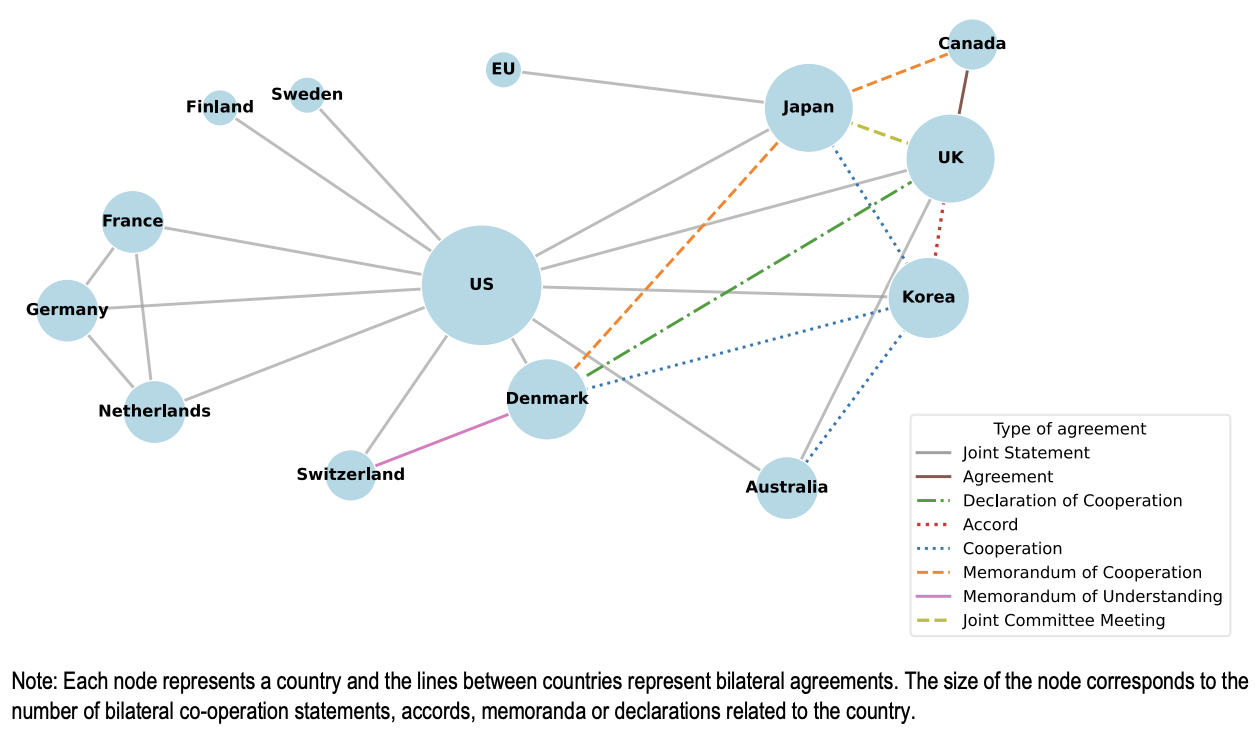
The UK is a relatively prolific signatory of bilateral agreements when it comes to quantum technologies. This week’s announcement could provide a pathway to convert these agreements into structured cooperation mechanisms that make the most of UK strengths and complementarities with allied nations.
Bilateral agreements related to quantum science and technology


.jpg)

